
We frequently hear about memory games and crosswords for brain training, but cognitive neuroscientists have long identified spatial intelligence as one of the strongest predictors of success in STEM disciplines, architectural design, and strategic decision-making.
Spatial cognition is not a fixed trait—it behaves like a muscle that strengthens under deliberate challenge. When you play a physics puzzle game, your brain is not just passively reacting; it is performing sophisticated geometric projections: calculating angles of incidence, estimating coefficient of restitution, and forecasting kinetic decay.
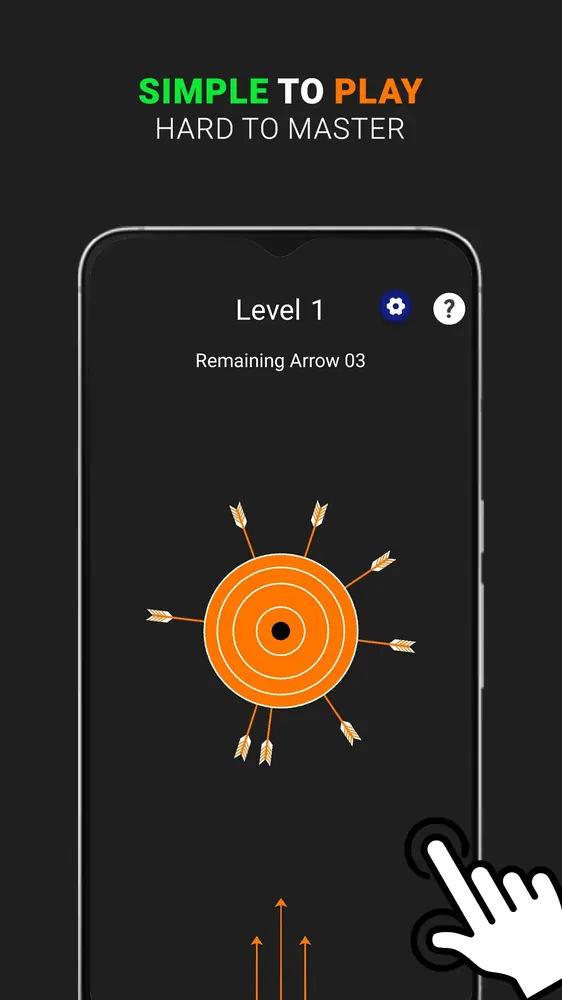 Calculating complex bounce trajectories activates cognitive spatial networks in the human brain.
In Perfect Shot by Shutter Games, every level presents a spatial riddle. By drawing trajectory vectors and banking shots around kinetic obstacles, players experience the intoxicating sensation of mathematical perfection when a ricocheting sphere strikes the bullseye.
Frequently Asked Questions (FAQ)
What is Spatial IQ and why does it matter in daily life?
Spatial IQ refers to the cognitive ability to visualize, rotate, and manipulate objects and spatial relationships in your mind. It is fundamental to navigation, architectural planning, mathematics, and rapid problem-solving.
How do ricochet puzzles like Perfect Shot train the parietal lobe?
When estimating where a ball will land after two or three bank shots, your brain constructs an internal 3D simulation of velocity, gravity, and angles of incidence, strengthening neural pathways responsible for spatial reasoning.
Can playing casual physics puzzles improve real-world reaction time?
Yes. Regular engagement with dynamic physics puzzles enhances visuomotor coordination and reduces cognitive latency when evaluating moving obstacles.
Explore Verified Google Play Studios
Discover more high-performance games, retro arcade titles, and creative utility apps developed by Shutter Games and Bhima Apps.